Toutes les publications
54 publications • Ordre chronologique

The recent rightward shift in the Latin American political scene largely benefits Israel and Prime Minister Benjamin Netanyahu. From Chile to Colombia, new presidents change their attitudes towards Jerusalem, marking a radical departure from their predecessors’ antagonistic stance. They follow the lead of other heads of state, like Argentina’s Javier Milei or El Salvador’s Nayib Bukele, who have always been staunchly and unconditionally pro-Israel. Portrayed as „Latin Trumps”, they usually frame their support for the Jewish State as a wider, joint effort to safeguard Judeo-Christian values. The growing influence of Evangelical Churches in South & Central America has become an important factor, shaping the political ambiance in the entire region. It is also worth mentioning deepening economic ties, with Israeli high-tech companies and military contractors providing defense equipment and intelligence solutions to armies and police forces across the Western hemisphere.

On August 7, Pakistan, Saudi Arabia and Turkey signed the “Meccah Joint Defense Agreement”, an event which has shaken the region even though talks about establishing such an alliance had been ongoing for several months. Is the conclusion of this new collective defense agreement truly a turning point in the history of the Middle East ? Or just a piece of parchment which will soon disappear in the dustbin of history ? The answer is probably something in between.

The collapse of the June 2026 U.S.–Iran understanding has exposed the limitations of a Gulf security architecture built primarily on military deterrence. This paper argues that, while sustained American engagement remains indispensable, Gulf states must complement deterrence with stronger critical-infrastructure protection, deeper GCC security cooperation, and greater institutional resilience.

Washington’s decision to grant the United Arab Emirates privileged access to advanced artificial-intelligence chips represents a strategic wager: that technological cooperation can anchor Abu Dhabi more firmly within the American sphere of influence. Yet the previous links with China of G42, the UAE’s state-backed artificial-intelligence and technology conglomerate, combined with controversies surrounding Emirati investments in businesses connected to the Trump family, have intensified concerns over security, transparency, and the future of American export controls.

The closure of the Strait of Hormuz has made alternative Eurasian trade routes an urgent necessity. Yet replacing IMEC’s Israeli Mediterranean anchor with a corridor through Syria and Turkey would not eliminate Europe’s vulnerability; it would exchange dependence on a maritime chokepoint for infrastructural reliance on a fragile Syrian state and strategic dependence on Ankara. Europe should expand and reinforce IMEC, not dismantle its original architecture.

President Alexander Stubb’s values-based realism captures Finland's need to defend democratic principles while dealing pragmatically with powers that do not share them. Its credibility, however, depends on whether Helsinki can explain consistently when values constrain policy and when national interests justify compromise.

Turkey’s growing hostility toward Israel is no longer a matter of rhetoric alone. Ankara’s support for Hamas, its entrenchment in Syria, its maritime assertiveness, its Russian defense ties, and its possible return to the F-35 program expose a strategic contradiction inside the Western alliance. Israel’s partnership with Greece and Cyprus is necessary, but it is not enough.

The U.S.–Iran interim arrangement may reduce the immediate risk of renewed conflict. Yet its long-term value will depend on whether sanctions relief remains tied to progress on Iran’s missiles, drones, proxy networks, and financial transparency.

President Karol Nawrocki’s visit to Ankara underscored a growing strategic convergence between Poland and Turkey. Despite Ankara’s complex relationship with Moscow, Warsaw sees Turkey as an indispensable partner in strengthening NATO’s deterrence from the Baltic Sea to the Black Sea.

As Washington increasingly expects allies to assume greater responsibility for their own security and economic resilience, governments in Europe, Asia, and the Middle East are reassessing long-standing assumptions about American leadership and protection.

Japan’s dependence on Middle Eastern energy has traditionally encouraged a balanced regional policy. Yet Iran's growing alignment with China, Russia, and North Korea is reshaping the strategic environment in which Tokyo operates. As Japan becomes a more proactive security actor, new opportunities are emerging for cooperation with Israel and the Abraham Accords countries in security, technology, and connectivity initiatives such as IMEC linking India, the Gulf, Israel, and Europe.

The drone revolution is entering a second phase: from unmanned aviation to integrated robotic warfare combining artificial intelligence, autonomous systems, and real-time battlefield coordination.

Following the 2026 war with Iran, Arab strategic thinking is undergoing a profound reassessment of Israel’s regional role. While Gulf and Arab governments increasingly recognize Israel’s military effectiveness against Iran, many analysts are simultaneously recasting Israel as a revisionist power. This paper examines the realist foundations of that reassessment and the ideological assumptions that continue to shape it.

European governments increasingly face the challenge of protecting religious freedom while addressing concerns over foreign-state influence. Drawing on recent experiences in Bahrain and Kuwait, this paper examines how Iranian state-aligned networks may exploit religious institutions and charitable financing structures, and proposes measures to strengthen transparency without undermining legitimate worship.

The EastMed pipeline is unlikely to emerge through market logic alone. But in a post-Ukraine and post-Hormuz world, Europe may increasingly view it not as a commercial gas project, but as strategic infrastructure tied to sovereignty, maritime resilience, and geopolitical diversification.

The electoral defeat of Viktor Orbán and the rise of Péter Magyar mark the end of a uniquely close political relationship between Budapest and Jerusalem. While Hungary is unlikely to turn openly hostile toward Israel, the strategic and ideological alignment that defined the Orbán-Netanyahu era is coming to an end.

How Somaliland could become a strategically valuable partner for Israel and the US-led alliance system in the Red Sea theatre, provided engagement remains disciplined, defensive, and focused on maritime resilience rather than militarization.

The dismantling of IRGC-linked and Hezbollah-affiliated networks across the Gulf following the regional escalation of February 2026 revealed the emergence of hybrid proxy ecosystems operating across ideological, financial, cyber, and operational domains. Gulf security is increasingly shifting from traditional deterrence toward integrated intelligence architecture designed to confront decentralized transnational infrastructures before they mature into durable regional threats.

The UAE’s departure from OPEC reflects a broader transformation of Middle Eastern geopolitics. Gulf states are increasingly pursuing national economic and security interests rather than coordinated oil policies, while the UAE is drawing closer to Israel and the United States in response to Iran and in competition with Saudi Arabia for regional influence.

The disruption of the Strait of Hormuz has exposed a structural flaw in global energy security. Replacing it requires more than alternative routes: it demands a reconfiguration of regional geopolitics. A land-based corridor system anchored in the Abraham Accords and centered on Israel offers the most credible pathway to secure Gulf–Europe energy flows.

Europe is likely to face growing Russian and Iranian air and missile threats in the coming months and years. These threats are interconnected and will require increased investments in defense and deterrence, especially given the uncertainties about the future of US protection to the continent.

Once perceived primarily as a recipient of international support, Ukraine is increasingly positioning itself as a provider of security expertise. Forged in war, its military innovation—especially in drone warfare and infrastructure targeting—is attracting growing interest in the Middle East, where states seek to hedge against uncertainty and evolving threats.

As Europe divides over the Middle East and domestic political pressures reshape foreign policy choices, Italy under Giorgia Meloni is navigating a growing tension between electoral constraints and strategic alignment—placing Rome at a crossroads between tactical repositioning and potential realignment within the Western alliance.

In the digital age, information warfare exploits the vulnerabilities of liberal democracies by turning freedom of expression into a vehicle for disinformation, polarization, and radicalization. The handling of the Israeli–Palestinian conflict offers a particularly revealing illustration of this phenomenon.

A fragile ceasefire conceals a deeper strategic reality: the partial degradation of Iran’s military and proxy architecture, the persistence of an unresolved conflict, and the risk that premature restraint will allow a destabilizing system to recover rather than weaken further.

From the Cold War to Iran, nuclear proliferation has been shaped less by diplomatic norms than by strategic constraints and, in several decisive cases, by the use or credible threat of force.

The crisis in the Strait of Hormuz is not a regional disruption but a systemic test of global order. Iran’s strategy of calibrated coercion exposes the limits of naval superiority without political cohesion and makes the case for a coalition of free nations capable of sustaining deterrence across the Euro-Mediterranean and Middle Eastern space.

Air superiority no longer guarantees decisive outcomes. In an era of inexpensive drones and missiles, technologically advanced air forces face adversaries capable of sustaining long-duration aerial pressure. This paper argues that maintaining strategic effectiveness now requires collective endurance, and proposes a flexible Western Air Coalition of the Willing to align operational learning, industrial capacity, and technological innovation.

Proxy warfare and indirect aggression challenge traditional interpretations of international law governing the use of force. In this evolving strategic environment, defending the rule of law requires both a realistic understanding of the right of self-defense and greater solidarity among democracies confronting authoritarian regimes.

Iranian missile and drone attacks against Cyprus have triggered a coordinated European military response in the Eastern Mediterranean. The emerging “Cyprus Shield” could become the first practical experiment in collective European defense in the Mediterranean and a test case for Europe’s ability to secure its southern flank.

The U.S.-Israeli war against Iran is exposing the limits of European military alignment with Washington. Domestic politics, economic vulnerabilities, and diverging threat perceptions are pushing most European governments, including close U.S. allies such as Poland, toward political support without direct military engagement.

The joint U.S.-Israeli campaign against Iran could mark the beginning of the end of the geopolitical era inaugurated by the Islamic revolution of 1979, weakening political Islam, dismantling Tehran’s regional proxy system, and reshaping the global balance between revisionist powers and democratic alliances.

The Munich Security Conference of 2026 portrayed the international system as fragmented, multipolar, and increasingly shaped by the “Global South.” This paper argues that the conference misread the structure of power: while multilateral institutions are weakening, power has not been evenly redistributed, American influence remains decisive though increasingly conditional, and contemporary alignments follow interests and capabilities rather than North–South divides.

Western leaders and democratic governments now face a moment of truth

Connectivity corridors, military integration, and technological sovereignty are reshaping the international order. As the India–Middle East–Europe Corridor takes shape and deterrence converges across regions, India and Israel have emerged not as peripheral partners, but as a structural axis in a US-led coalition of contributing democracies.

Four years after Russia’s invasion of Ukraine, the war has become a decisive test of Western deterrence. It has exposed the collapse of post-Cold War illusions, the return of nuclear intimidation, and the need to rebuild power on industrial, technological, and civilizational foundations.

Poland’s hesitation over joining the U.S.-backed Board of Peace reflects not indecision, but a deeper strategic tension between domestic politics, constitutional constraints, transatlantic relations, and Warsaw’s underappreciated interests in the Middle East.

In the twenty-first century, deterrence no longer rests solely on weapons systems and troop deployments. It rests on supply chains. Critical minerals are the material foundation of modern military power, and the resilience of democratic alliances now depends on their ability to secure them collectively.

Japan’s strategic turn reframes the Western debate over autonomy and alignment, and highlights Israel’s role in the emerging architecture of free nations and tech-driven economies.

The Board of Peace is not the problem: it is a symptom of the United Nations’ structural paralysis and the urgent need to rethink collective security among democracies.

Europe’s unease over U.S. moves in Venezuela, Iran, and Greenland is understandable; but as autocracies weaponize the law and alliances strain, the defense of the world order requires strategic clarity, not procedural paralysis.

The Trump Administration's National Security Strategy marks a break with decades of U.S. foreign policy. Europe is no longer central, while Israel sits firmly inside Pax Silica. This paper argues that partnering with Israel offers European states a strategic pathway to regain proximity to American power through technology, energy, and security cooperation.

Israel’s recognition of Somaliland challenges long-standing diplomatic taboos in the Horn of Africa. Grounded in legal logic and strategic necessity, the move reflects shifting priorities in Red Sea security and great-power competition.

Hamas’ systematic capture of humanitarian aid structures exposes Europe to legal, security, and reputational risks. Closing the gap between counter-terrorism law and humanitarian practice is essential to protect both civilian assistance and European credibility.

Europe’s counterterrorism framework has failed to address transnational Islamist movements operating through non-violent, legally embedded strategies. This paper argues that the Muslim Brotherhood represents a coherent ideological and organizational threat that EU law is already equipped to confront.
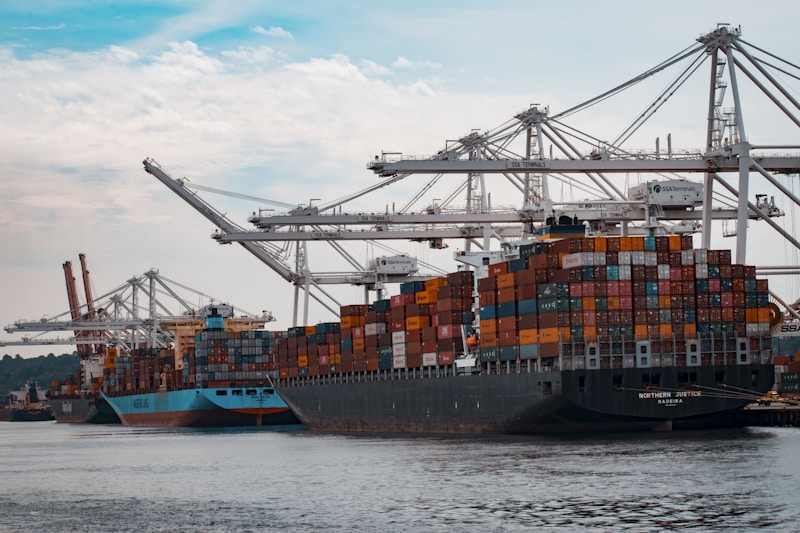
As supply chains become instruments of power, IMEC offers trusted connectivity linking the Indo-Pacific, the Middle East, and Europe. Trieste’s geography, rail integration, and Euro-Atlantic anchoring make it a uniquely resilient European gateway for the corridor.

The Trump Administration's National Security Strategy reflects a structural reordering of U.S. foreign policy priorities where Europe is no longer central. This paper argues that closer cooperation with Israel offers Europe its most credible pathway back into America's strategic core through technological edge and political reliability.

Israel’s new long-term gas agreement with Egypt is more than a commercial breakthrough: it anchors a durable energy corridor linking Israeli supply, Egyptian LNG infrastructure, and European demand. In doing so, it reshapes the Eastern Mediterranean into a strategic platform for European diversification, Egyptian stability, and transatlantic alignment.

Nigeria’s multidimensional crisis threatens regional stability and Western strategic interests. A coordinated European-Israeli-American approach is essential to restore security, strengthen governance, and counter the growing influence of extremist and rival powers in West Africa.

Despite years of European funding and diplomatic pressure, the Palestinian Authority’s school curriculum continues to promote antisemitism, glorify violence, and deny Israel’s legitimacy. This paper argues that only strict, enforceable EU conditionality can align Palestinian education with peace and coexistence.

UNSC Resolution 2803 gives international legitimacy to President Trump’s Gaza plan, authorizing an international stabilization force and a transitional governance body. For Israel, it offers both strategic opportunities and new risks, especially in the context of Saudi Arabia’s F-35 acquisition.

Kazakhstan’s accession to the Abraham Accords opens a new geopolitical triangle linking Europe, Israel, and Central Asia. By combining resources, innovation, and connectivity, this partnership offers a strategic counterweight to Russian and Chinese influence in Eurasia.

Sudan’s collapse is reshaping the Red Sea, the Sahel, and Mediterranean security. Coordinated European-Israeli action can help stabilize the region, protect maritime routes, and mitigate one of the world’s worst humanitarian crises.

This paper provides comprehensive legal arguments demonstrating that Israel acted in self-defense by launching strikes against Iran on June 13, 2025, based on Article 51 of the UN Charter, documenting Iranian acts of aggression since 1979 and explicit statements by senior Iranian officials expressing their intention to destroy the State of Israel.